Blog › Anxious attachment
Anxious Attachment: How to Survive the Hour After He Leaves You on ReadWithout the Double Text, and Without Checking His Last Seen
He read it at 2pm. It is 5pm now, your chest went tight around 3, and you have reread your own message for tone twice. The wait has a name, and there is one thing to do with the next hour.

Your chest knew at 3 o’clock
He read it at 2:04pm. You know, because the app told you, and you have looked at the word 4 times since.
By 3 your chest was tight. By 4 you had read your own message back, hunting for the tone, and found a version of it that sounded needy. By 5 you had turned airplane mode on and off, just to be sure it had really delivered.
Nothing has happened. That is the strange part. Nobody said anything, nobody did anything, and you have had the worst afternoon of your week.
Anxious attachment is what a silence does to a body that learned early that affection could go quiet without warning. The system that should read a gap as a gap reads it as a threat. It fills the blank with the worst version it can build, then treats that version as news.
So he has not answered, and by 4 he has lost interest, and by 5 you are working out what you did. The story arrives fast and whole, and it feels like knowledge. It is a forecast. It has never once been checked.
“You are grading a silence that has not said anything yet.”
It got trained somewhere. A parent who was warm on Tuesday and gone by Thursday. A first love who went quiet to make a point. Somewhere, a gap turned out to mean something, and your body has read every gap since as the same gap.
One afternoon is an afternoon. The pattern is the afternoons stacking up. The reply you tested him with. The reel you sent so he would have to react. The 2 grey ticks deciding your evening.
It rarely arrives alone. 3 habits sit closest to it, and Glissa scores all 4 every week.
 Anxious attachmentA delayed text became a full character study
 Accepting breadcrumbsThe breadcrumbs felt better than the silence
 Pulling away firstLeft before it could be done to you
 Losing yourselfMolded yourself to fit into his life
Most advice about anxious attachment tells you what you are and stops. The people pleaser gets a script; you get a diagnosis and a book. What you can reach is the hour itself, while the phone is still face up on the cushion.
The first 2 moves ask you to send nothing
Run them in order. The first 2 ask you to change nothing about him, only what you do with the next hour.
- 1Write the forecast down, with a dateHe has lost interest. Type it, and give it a day it would show by. A fear with a date can be wrong by Friday. A fear without one cannot be.
- 2Send nothing for one hourThat includes the breezy follow-up, the reel, and a reaction on his last message. The hour is the whole dare, and it is the cheapest one you will ever take.
- 3Put the phone in another roomThe alarm in your chest is built to pass on its own, and it passes faster without a screen to check. 20 minutes, then you are allowed back.
- 4Do the thing you were doing at 1:59The wait took your afternoon. Take it back. Finish the email, the walk, the episode. The reply lands the same whether you watched for it or not.
- 5Count the wait, not the storyWhen he answers, write 2 things: how long it took, and what it said. A month of that is a table. Memory keeps the one cold reply and drops the 20 warm ones.
- 6Answer the reply as a replyNo joke about the wait, no wounded busy day then. Punishing the gap teaches him to dread your phone, and teaches you that the gap was a crime.
- 7Re-score at week 9Put the forecasts beside what happened. 9 weeks of he has lost interest next to 9 weeks of replies. Memory will say nothing changed. The table will disagree.

Give each one a week. 7 weeks is short for something you have been doing since the first person who mattered went quiet on you.
Nobody has to hear about your attachment style, and he never has to know the hour happened. Your nervous system needs proof that a gap can pass and nothing ends.
The test ends by handing you one dare for this week, sized for a text, from your own answers.
Give me my first dareWhich of these was you this week?
You cannot argue with a forecast you have not written down
2 findings do the work here, and one of them is nearly forty years old.
-
The pattern was named in a newspaper
In 1987, 620 readers of a Denver paper picked which of 3 paragraphs described them in love. About 1 in 5 picked the anxious one: wanting to merge completely, and worrying the other person did not really want them.
Hazan and Shaver, 1987
-
A move decided in advance gets made
Pooled across 94 studies and 8,461 people, deciding when and where you would act, before the moment, had a medium to large effect on whether you did.
Gollwitzer and Sheeran, 2006
The forecast is the part you can reach. Write the situation and the move together, before either one shows up: when he reads it and goes quiet, the phone goes in the kitchen drawer until 6.
The reply is the trigger, by count
14 of the 25 most upvoted posts on r/AnxiousAttachment in the past year name a reply, or the wait for one, as the thing that set them off. Fights and breakups come further down the list. The gap comes first.
Read for the audience research behind this site, 21 September 2026. 25 posts, one subreddit, one year.

Neither study was run on women watching 2 grey ticks. The mechanism carries; the population is ours to test.
Reassurance answers back, a friend remembers, and Glissa keeps the count
3 things help in the hour, and we make one of them, so read this knowing that.
Asking him is the fastest. One straight question, one true answer, and the afternoon is settled. It works exactly once. The second time it is a request for reassurance, and a request for reassurance hands him the job of managing your afternoon. Good ones do it for a while. The gap after that feels worse, because now he knows.
A friend is where the story goes at 11pm. She is kind, she remembers the worst one, and she has heard this version 4 times. By Friday you have told it enough that it feels true.
| Compared on | glissa | Asking him | A friend |
|---|---|---|---|
| Cost | $4.99 a monthbilled as $59.99 a year | Free, once | Free, at 11pm |
| Relief arrives | When you take the hour | When he answers, if he does | When she texts back |
| Who carries it | You, for 30 seconds | Him, and he can feel it | Her, and she is tired |
| Week 9 vs week 1 | The same questions, counted | Nobody kept count | She remembers the worst one |
| Strongest at | Catching it inside the hour | One true answer, once | Being held, that night |
The orange column is ours. Day 30 retention on mental health apps: Baumel and colleagues, JMIR, 2019
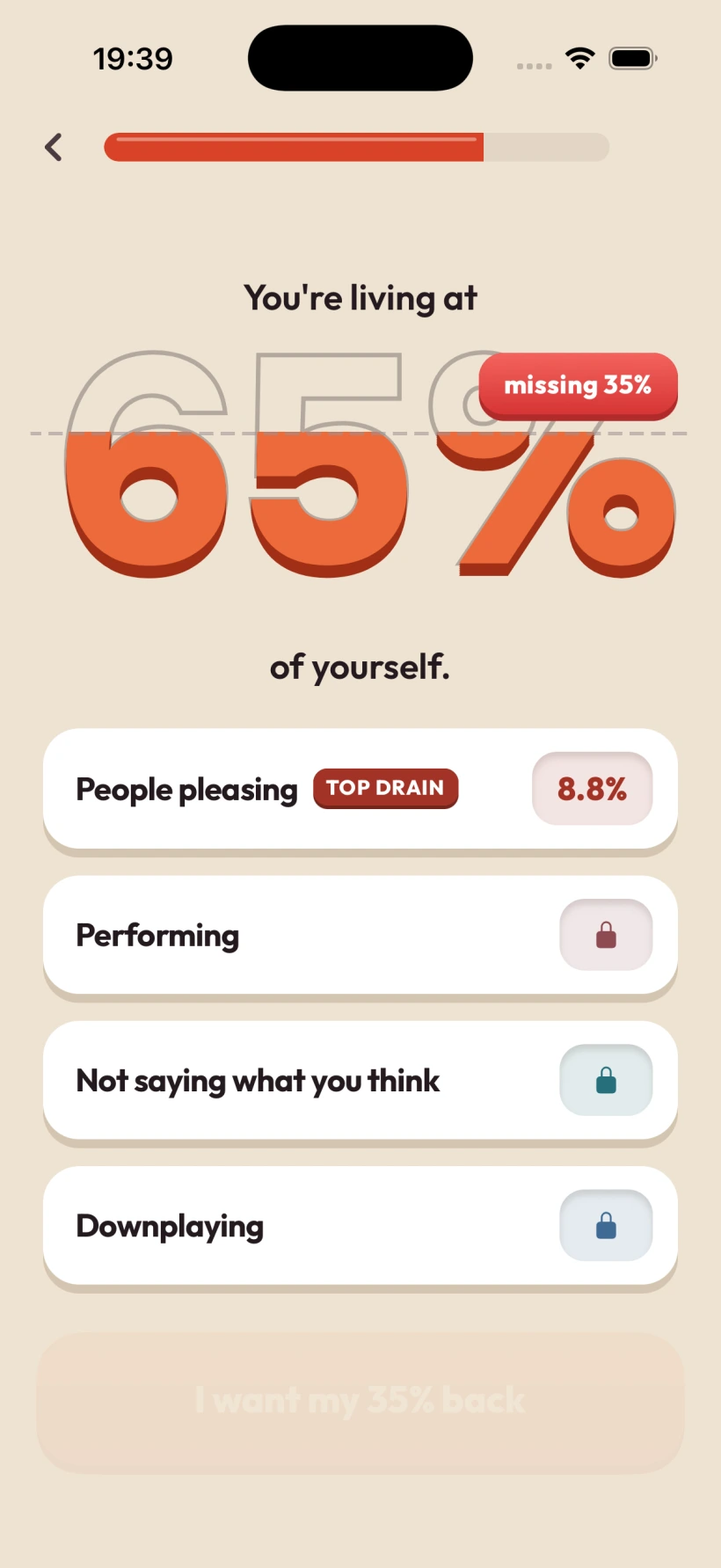
Glissa is an iPhone app doing a smaller job. A short test gives one number for how much of you is showing. 11 habits sit underneath it, anxious attachment among them. All 11 get re-scored every week, so week 9 sits beside week 1 without you remembering a thing. You tap. The only place to type is one optional box called the vent.
Baumel and colleagues found day-30 retention on mental health apps very low. Almost everyone is gone inside a month. We built for 30 seconds a day because of that number, and we will not claim we have beaten it.
Glissa has no users to point at. No ratings. No testimonials, and we will not borrow anyone else’s. What we have is the hour above, and whatever your own 9 weeks show you.
Get back the parts of you that you filed down to keep everyone else comfortable. It starts this week, with one small dare.
Show me the one I keep pickingThe message you send once
The dare that fits in this week is small enough to feel silly. Send the message once. Do not read it back. Then the phone goes down, and the hour is yours whatever he does with his.

Questions
What if he really has lost interest?
Then the hour changes nothing about him, and you find out on Friday with your evening intact instead of on Tuesday with your evening gone. The move pretends nothing. It refuses to grade a silence before it has said anything. A forecast with a date on it is allowed to come true, and when it does, you have a Friday, not a story.
Is it needy to double text?
One message is a message. The second one, sent to check the first landed, is a request for reassurance, and the request is what costs you, because it hands him the job of settling your afternoon. Send it once. If there is something new to say by Thursday, say the new thing.
Should I tell him I have anxious attachment?
Telling him what you have is fair, and a good one will hear it. Handing him the alarm is the part that wears a good one down. The name is yours to carry, and the hour is yours to take. What he gets is a reply answered as a reply, which is the version of you he texted in the first place.
How long does it take to heal anxious attachment?
Nobody honest will give you a date. Glissa gives you a unit: the same 11 habits, re-scored every week, so the wait in week 9 sits beside the wait in week one. The first thing that changes is how long you can leave the phone in the other room.
In the version where this goes well, he replies at 7:40 about something else
Go back to Tuesday, 2:04pm. Read. Your thumb is already moving toward the message, to read it again.
This time you leave it unread and write the forecast on the back of an envelope. He has gone off me. Proof by Friday. The phone goes in the kitchen drawer. You finish the thing you were doing at 1:59.
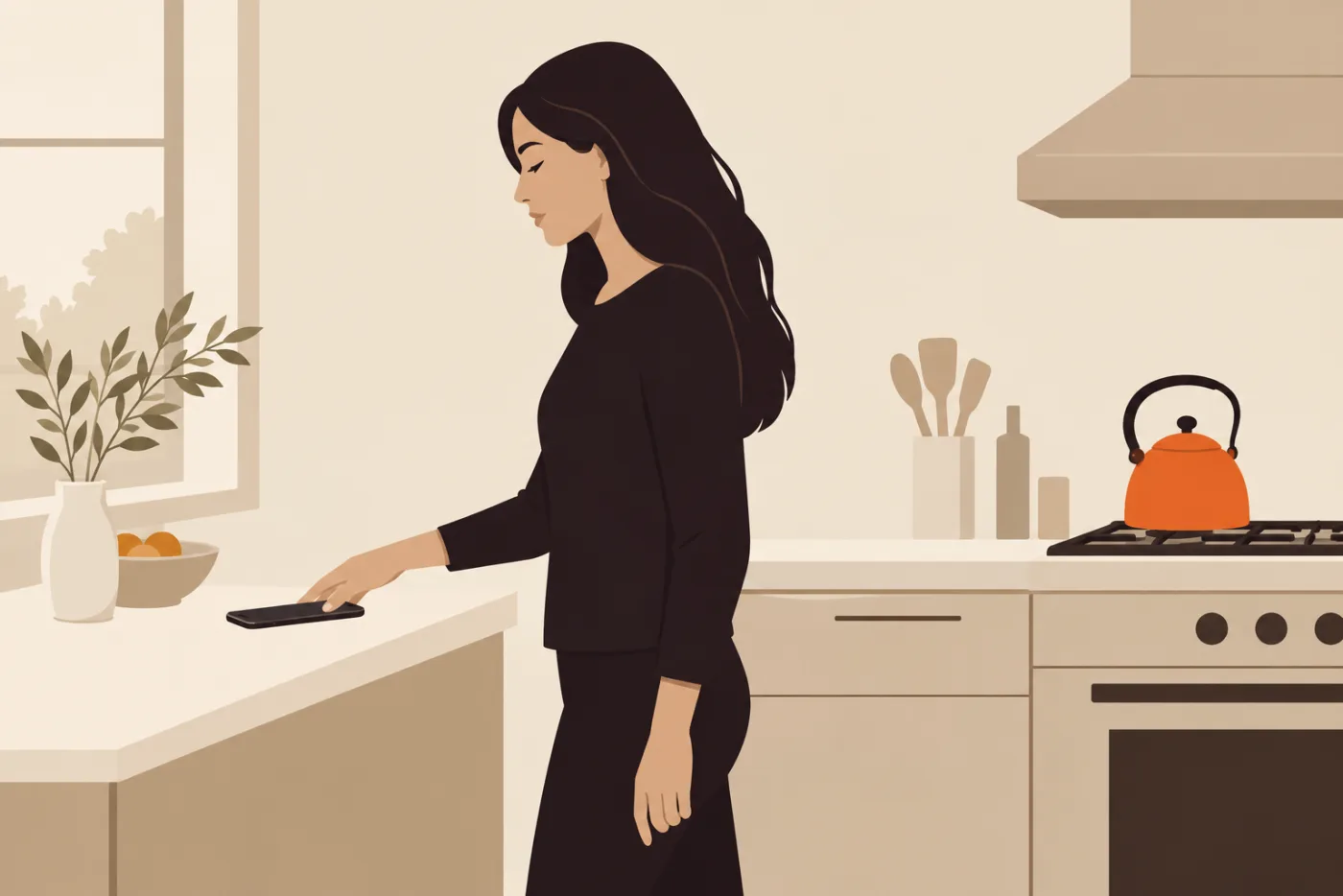
At 7:40 he replies, about something else, the way he was always going to. You answer it as a reply. Friday comes, and the envelope is wrong. That is one row in the table.
The first month is mostly catching it at 4, with the phone already in your hand. Catching it late still counts as catching it.
If you want something counting while you learn, we built one. One number, 11 habits re-scored weekly, one dare before Sunday. 30 seconds a day on an iPhone. If it reads you wrong, tell us.
The glow up that starts on the inside
Get back the parts of you that you filed down to keep everyone else comfortable. 30 seconds a day, all the way back to 100% and past it.
Download Glissa for iPhone $4.99 a month, billed as $59.99 a year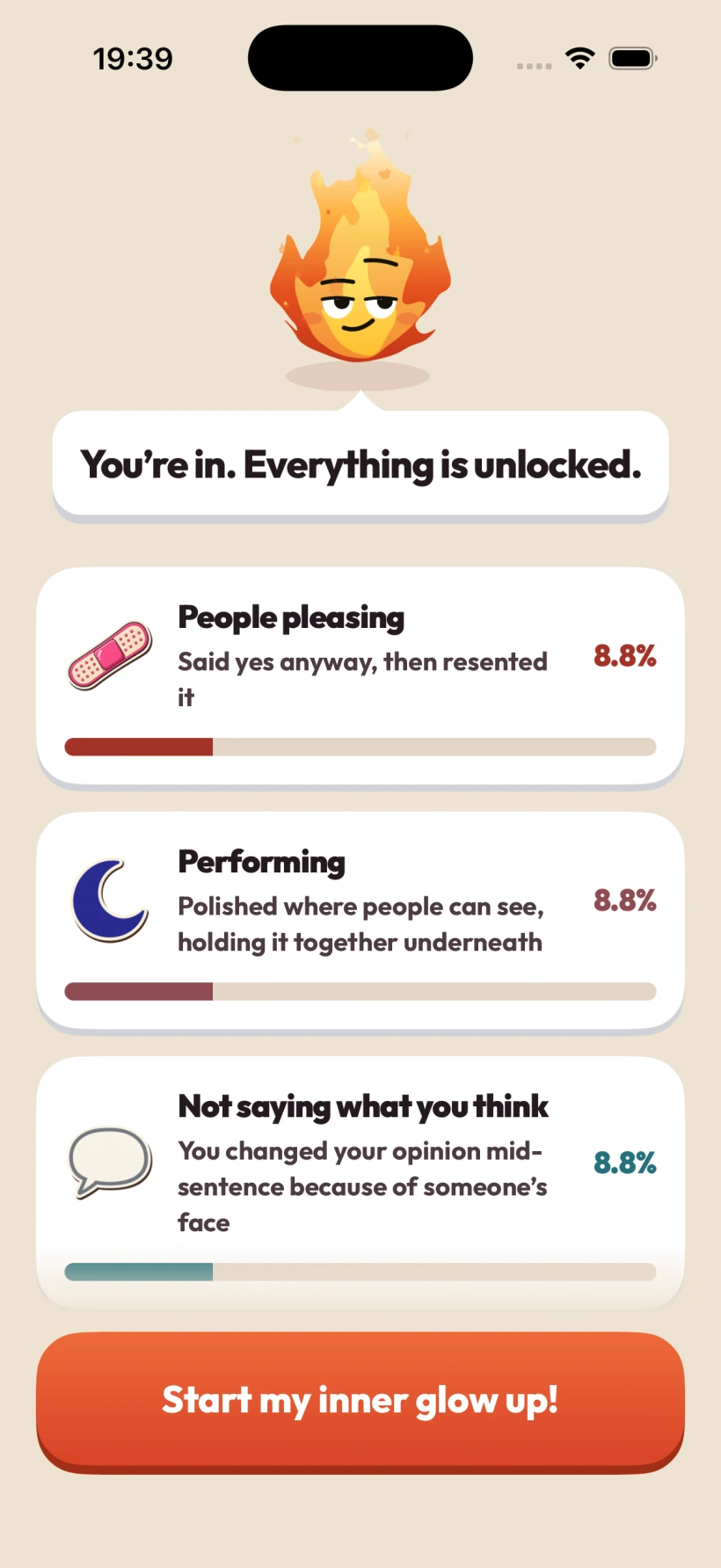
Keep reading
All of it →
Situationships
How to Get Over a Situationship: A 7-Day Plan for When It Never Officially Ended
4 months, no label, and his hoodie is still in your back seat. The ending nobody handed you, and the first 7 days, one move a day.
Rosa Tan · 9 min read
Losing yourself
How to Find Yourself Again Without Leaving Him: 9 Signs From a Tuesday
Someone asks what music you are into, and you pause. 9 signs from an ordinary Tuesday, and the order you say first.
Hannah Moore · 9 min read
Pushing people away
Why Do I Push People Away When It Gets Good? How to Catch the Exit on Day 3
He said he wanted to meet your friends, and by Thursday you answered in one word. The pull-back has a shape, and you can catch it on day 3.
Nadia Ferreira · 9 min read