Blog › Hyper-independence
Hyper-Independence: Why You Took an Uber Home From SurgeryAnd the One Ask That Starts Undoing It.
4 people were free that Saturday and you asked none of them. The internet files this under trauma responses, the research calls it compulsive self-reliance, and our read is that it was learned. You leave with one ask, sized for this week.
You carried the mattress alone, with 4 people free
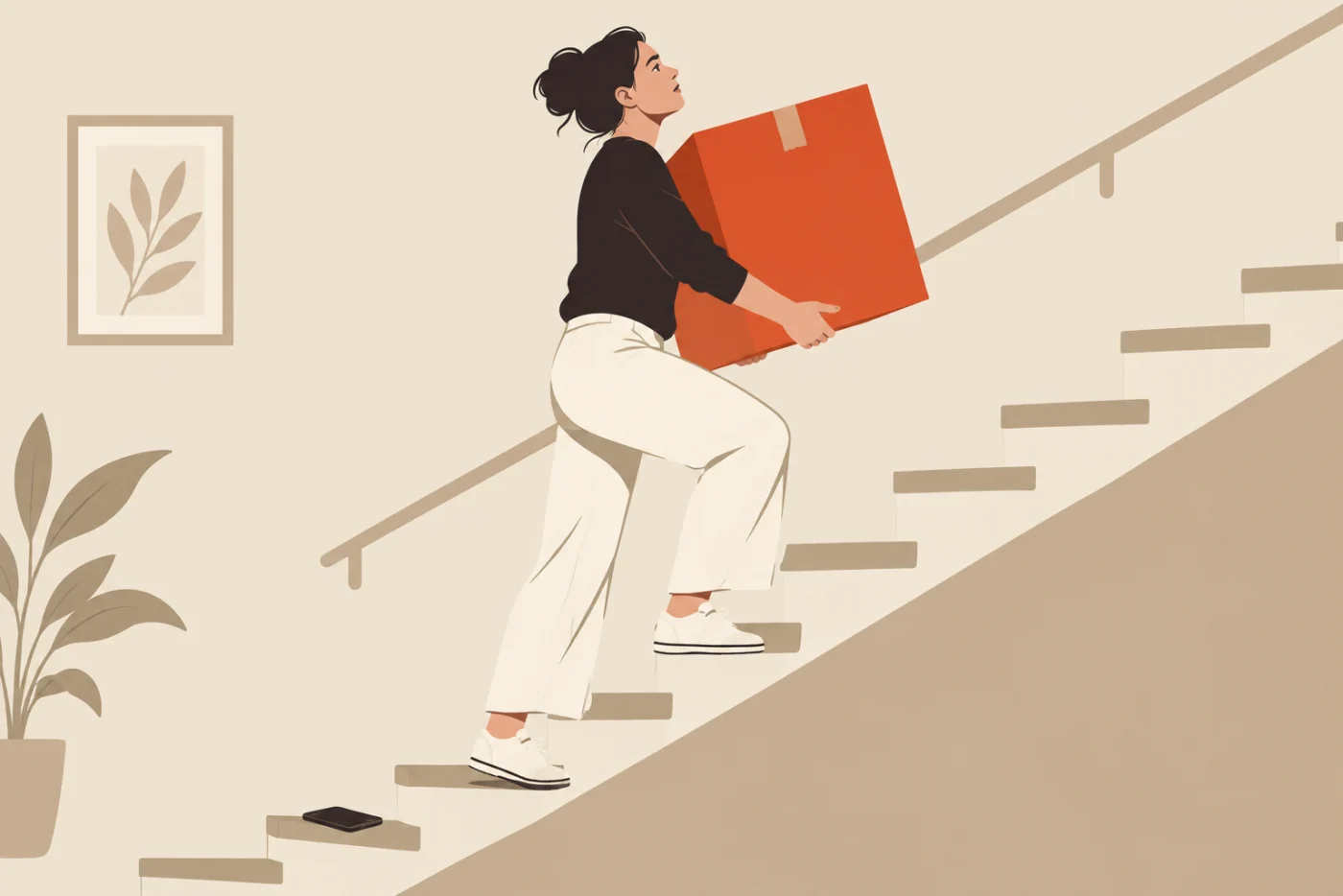
The mattress came on Saturday. 2 flights, a turn on the landing, and 4 people in your phone who had said they were around. You asked none of them.
You got it up. It took 40 minutes and a bruise the length of your forearm, and when your sister asked how the move went you said fine, easy, done.
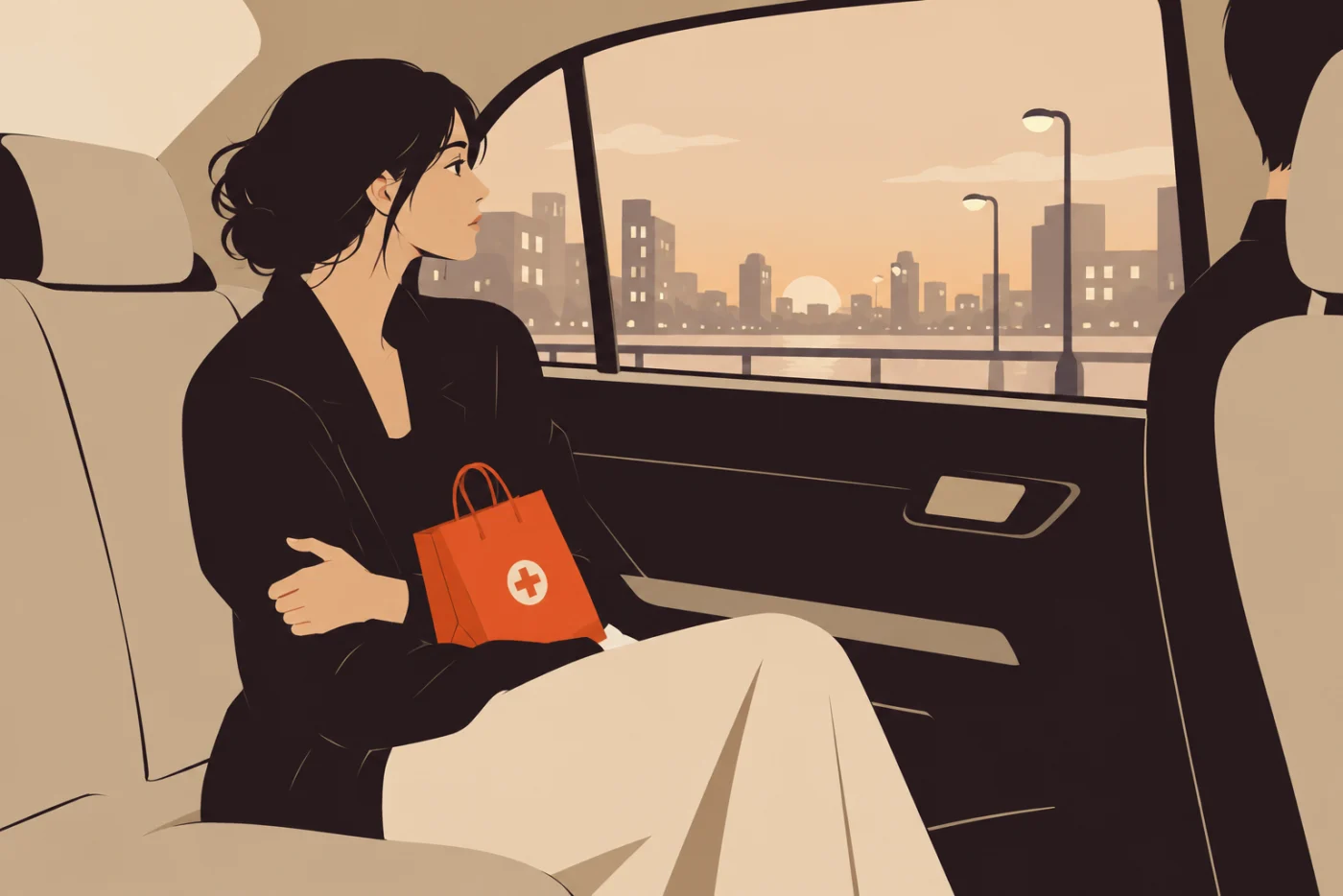
Last year it was the appendix. Out overnight, an Uber home because his job interview was that morning, and work the next day. Nobody worried, because nobody was told.
Hyper-independence is what a body does when asking once cost more than it gave. The ask goes out, help comes grudgingly, or late, or with conditions, and the maths gets done by a child: it is cheaper to do it yourself. You have been paying that price ever since and calling it a strength.
It looks like a strength from outside, which is why everyone compliments it. You have always been so independent. We never had to worry about you. Inside, it is the same 3 words on a loop: do not bother them.
“You’ve always been so independent.”
It got trained somewhere. A house where help came with a sigh. A parent who was proud when you needed nothing, and busy when you did. Somewhere, not needing anything got you a kind of love, and your body filed that under how to be loved.
One mattress is a mattress. The pattern is the Saturdays stacking up. The lift you did not ask for in the rain with 2 bags. The appointment you put off because somebody would have had to drive you. The time someone asked how you were, you told them, and you saw their face and stopped for good.
It rarely arrives alone. 3 habits sit closest to it, and Glissa scores all 4 every week.
 Hyper-independenceCould not ask for help without feeling like a burden
 Being everyone’s therapistThe group chat therapist who had nobody
 PerformingPolished where people can see, holding it together underneath
 DownplayingMade something you like sound like nothing much
Most advice about hyper-independence tells you where it came from and stops. The easy version of you has its own page. This one is about the ask, while it is still a text you have not sent.
The first 2 moves are counting, and the third is a text
Run them in order. The first 2 ask you to change nothing, only to write down how often help was an option and what you did instead.
- 1Count the times you did it alone for 7 daysEvery time help was available and you did not take it: the lift, the box, the form, the appointment. Change nothing else. You are learning your own rate.
- 2Write the forecast down, with a dateIf I ask, she will sigh, say yes, and think less of me by Sunday. Type it, and give it a date. A fear with a date can be wrong by Sunday. A fear without one cannot be.
- 3Say you will ask tomorrow, then askToday is for the sentence. Tomorrow is for sending it: a recommendation, a lift, a hand with the box. Small enough that a no would cost you nothing.
- 4Ask for one thing you could do yourselfThen let them do it their way, badly, without stepping in to fix it. The ask is half the dare. The not-fixing is the other half.
- 5Do not apologise for itOne ask, no sorry before it and no sorry after. The sorry is the part that tells them you expected a no.
- 6Let someone carry something, and keep your hands in your lapIt will feel like being watched. That feeling lasts about as long as the stairs.
- 7Re-score at week 9Put the forecasts beside what happened. 9 weeks of she will think less of me next to 9 weeks of who turned up. Memory will say nobody came. The count will say who did.
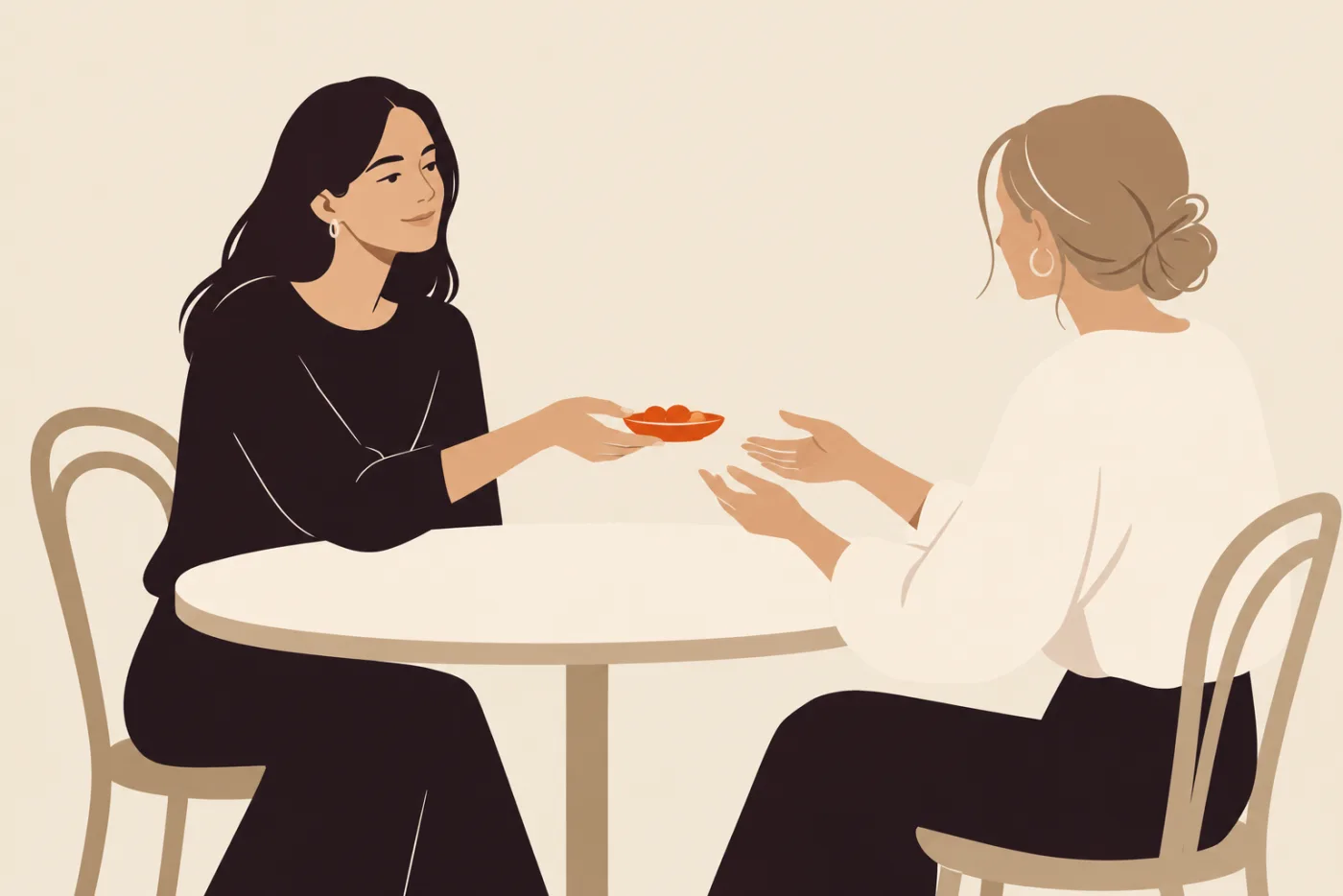
Give each one a week. 7 weeks is short for something you learned before you could carry anything.
Nobody has to hear about the house you learned it in, and none of this needs a speech. Your nervous system needs proof that an ask can go out and the person still likes you on Sunday.
The test ends by handing you one dare for this week, sized for a lift, from your own answers.
Give me my first dareWhich of these was you this week?
You assume the no, and the no is the part you have never tested
2 findings do the work here, and one of them measured the no directly.
-
People said yes about twice as often as the asker expected
Across a series of studies, people who had to ask strangers for help guessed how many would agree before they asked. They underestimated by roughly half. The no they were bracing for mostly did not come.
Flynn and Lake, 2008
-
It had a name before the internet gave it one
In 1977, Bowlby described compulsive self-reliance: the child whose bids for comfort were rebuffed grows into the adult who cannot ask, and who calls it independence. Trained is his word too.
Bowlby, 1977
The forecast is the part you can reach. Write the moment and the move together, before either one shows up: when the box is at the bottom of the stairs, I text one person before I lift it.
The line the most women agreed with, on this pattern
Under the biggest hyper-independence video we read, the top comment was 7 words long: We never had to worry about you. 66,579 women tapped the heart on it.
Read for the audience research behind this site, 20 September 2026. One video, one comment, its heart count that day.
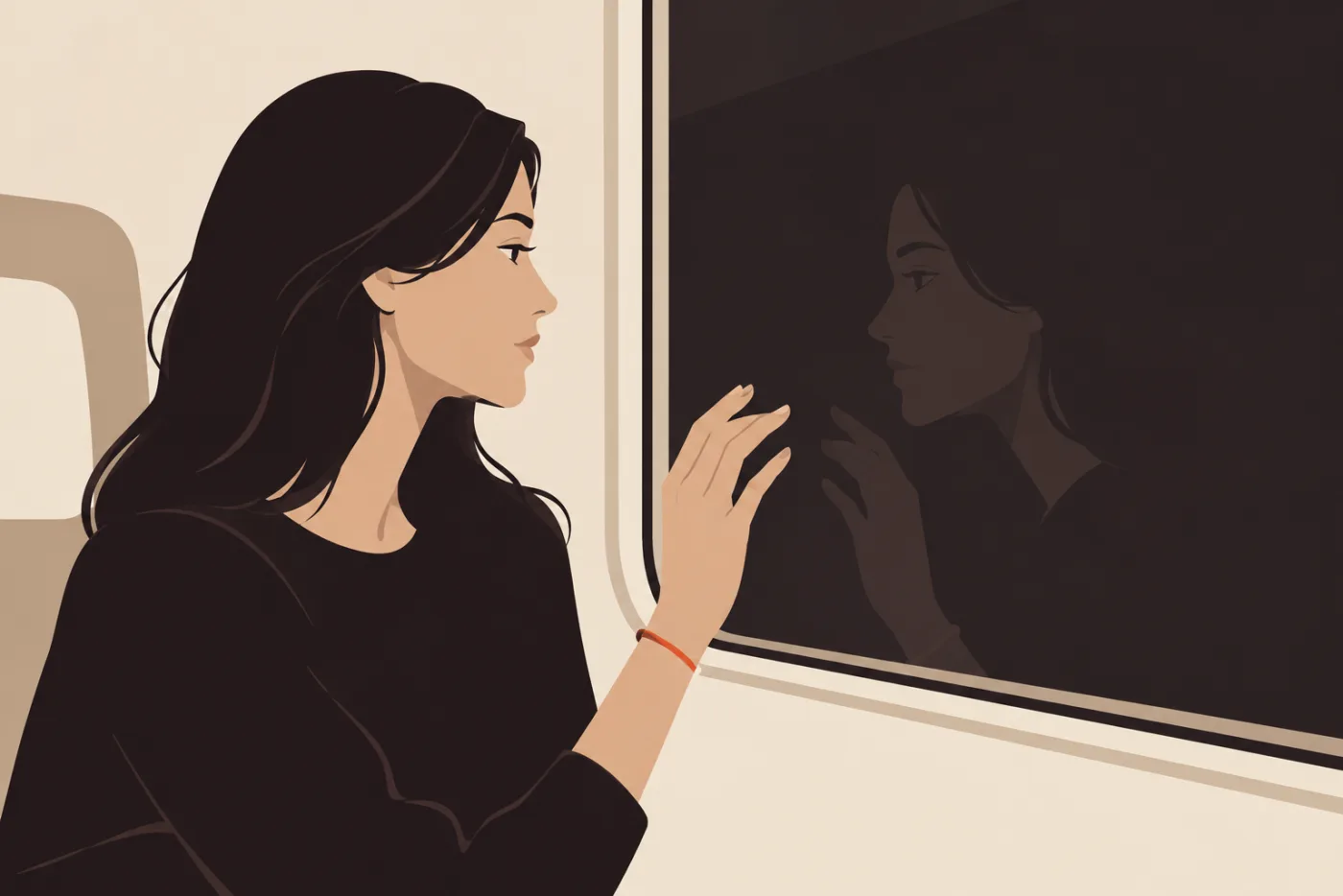
Neither study was run on women carrying mattresses alone. The mechanism carries; the population is ours to test.
Just ask has no size, therapy has the why, and Glissa keeps the count
3 things help here, and we make one of them, so read this knowing that.
Just ask is the advice everyone gives, and it is true and useless. It arrives without a size, and the size is what stops you. Ask for what? From whom? Before or after the box is on the landing? A slogan cannot answer that, so you nod and carry the box.
Therapy is the strongest of the 3 and the slowest to arrange. A trained person asks where the sigh came from, and that matters. It costs a session a week, it runs on her calendar, and the ask still has to happen on a Saturday with the box at the bottom of the stairs.
| Compared on | glissa | Just ask | Therapy |
|---|---|---|---|
| Cost | $4.99 a monthbilled as $59.99 a year | Free, from everyone | A session a week |
| Relief arrives | When the ask is out | It never says how | The week you say burden out loud |
| Who carries it | You, for 30 seconds | You, alone, with a slogan | A trained person, if you let her |
| Week 9 vs week 1 | The same questions, counted | Nobody counted the asks | Your therapist remembers |
| Strongest at | Sizing the first ask | Being true | The why underneath |
The orange column is ours. Day 30 retention on mental health apps: Baumel and colleagues, JMIR, 2019
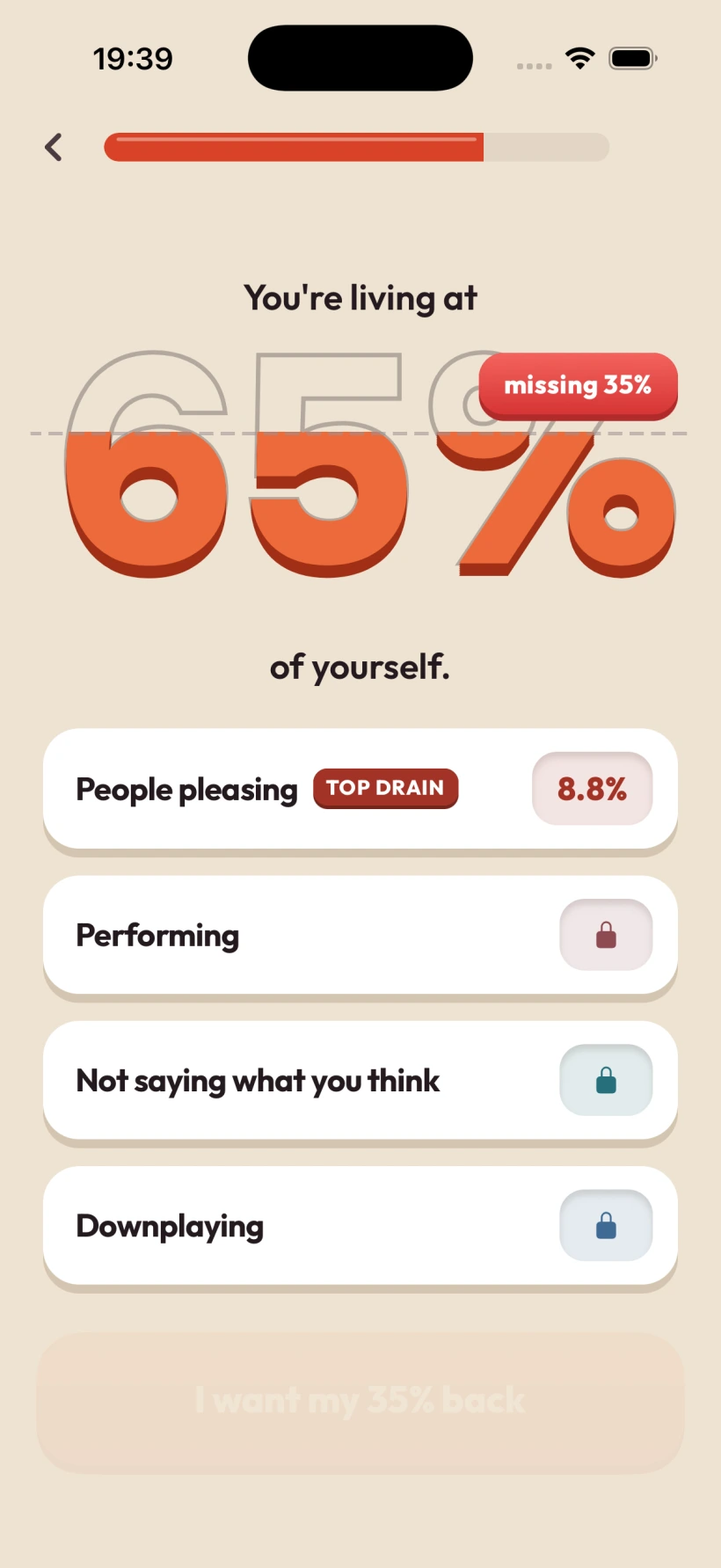
Glissa is an iPhone app doing a smaller job. A short test gives one number for how much of you is showing. 11 habits sit underneath it, hyper-independence among them. All 11 get re-scored every week, so week 9 sits beside week 1 without you remembering a thing. You tap. The only place to type is one optional box called the vent.
Baumel and colleagues found day-30 retention on mental health apps very low. Almost everyone is gone inside a month. We built for 30 seconds a day because of that number, and we will not claim we have beaten it.
Glissa has no users to point at. No ratings. No testimonials, and we will not borrow anyone else’s. What we have is the count above, and whatever your own 9 weeks show you.
Get back the parts of you that you filed down to keep everyone else comfortable. It starts this week, with one small dare.
Show me the one I keep pickingThe ask the size of a lift
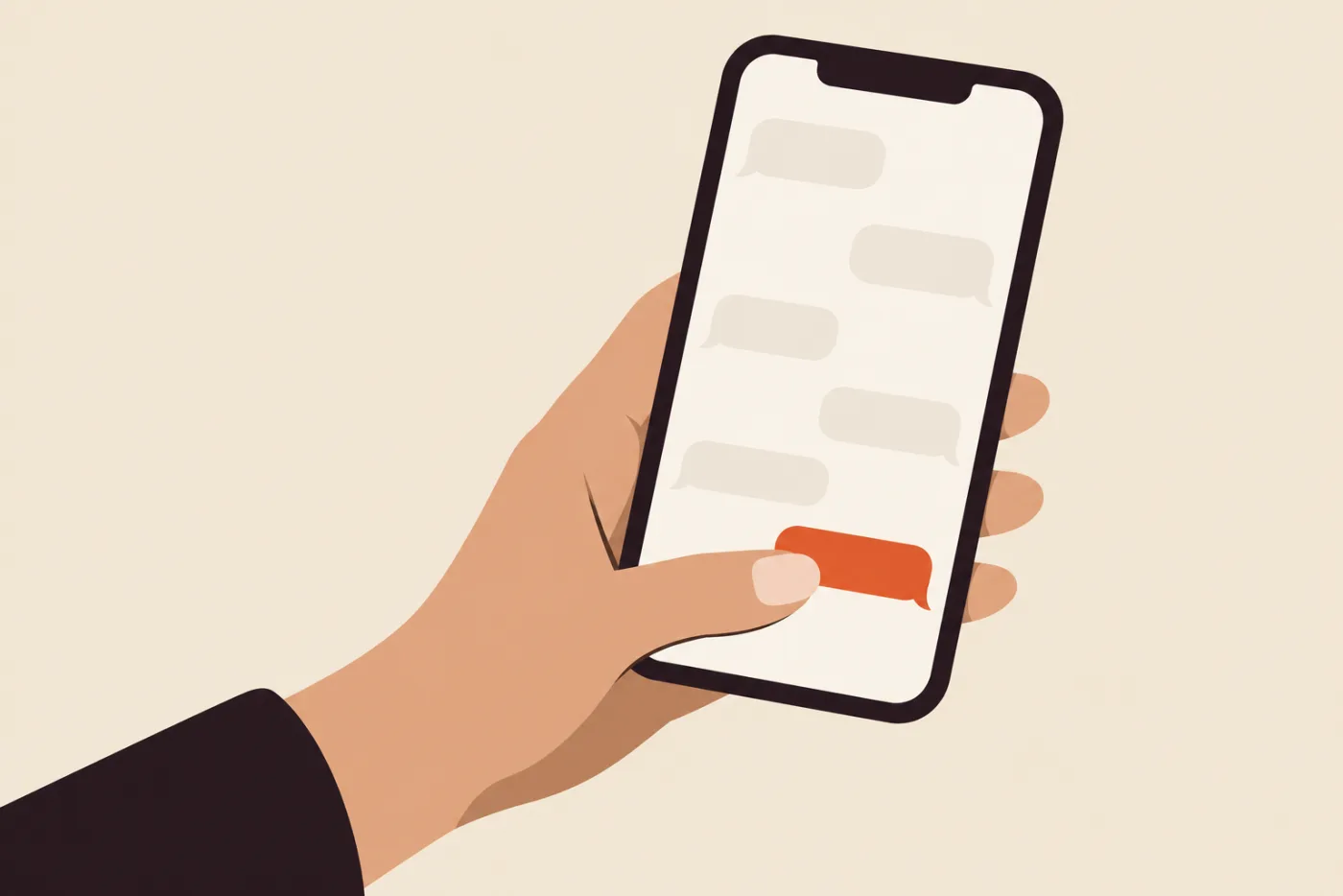
The dare that fits in this week is small enough to feel silly. Ask one person for one small thing, out loud, before it is an emergency. A lift, a hand, a recommendation. Then let them do it, and keep your hands in your lap.
Questions
Is hyper-independence a trauma response?
The phrase is the internet’s, and it is close enough. The research word is compulsive self-reliance, named in 1977, and it describes the same thing: help came grudgingly or late when you were small, so you stopped asking. Trained is the honest word, and a trained thing can be retrained, one ask at a time.
What if I ask and they say no?
Then you know something you have been guessing at for years, and the guess was worse. One no, from one person, on one Thursday, is a row in the table. The forecast you have been running had every Thursday in it, and every person, and it was never once checked.
Isn’t being independent a good thing?
It is, when it is a choice. You can do the box alone and you can also ask, and you pick. Hyper-independence is the version with one option. The tell is the surgery: independence takes the lift home. The other thing takes an Uber and goes to work the next day.
How do I ask for help without feeling like a burden?
Ask small, ask out loud, and do not apologise for it. The sorry is the part that tells them you expected a no. The feeling of being a burden lasts about as long as the stairs. What stays is who turned up, and the count keeps that for you.
In the version where this goes well, your brother carries the top end
Go back to Thursday. The mattress comes on Saturday, and your thumb is already opening the app to book the van for one.
This time you text him instead. 9 words, no sorry. Can you help with the mattress Saturday at 11. He sends a thumbs up, because that is what people do when they are asked for a mattress.
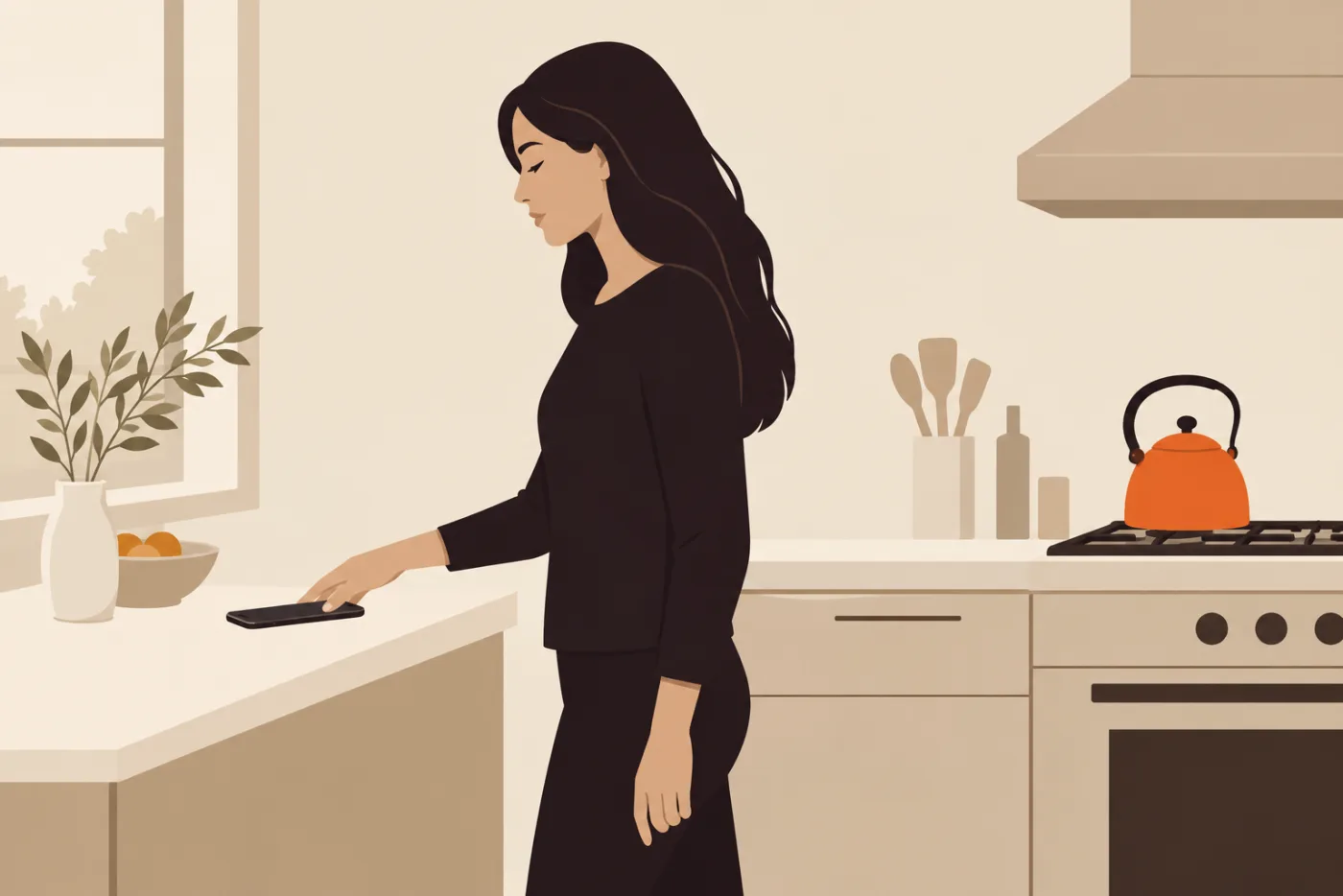
He carries the top end. You carry the bottom. Nobody says anything about it, and there is tea. That is one row in the table. 9 weeks of rows is a piece of you back.
The first month is mostly catching it at the top of the stairs, with the box already up. Catching it late still counts as catching it.
If you want something counting while you learn, we built one. One number, 11 habits re-scored weekly, one dare before Sunday. 30 seconds a day on an iPhone. If it reads you wrong, tell us.
The glow up that starts on the inside
Get back the parts of you that you filed down to keep everyone else comfortable. 30 seconds a day, all the way back to 100% and past it.
Download Glissa for iPhone $4.99 a month, billed as $59.99 a year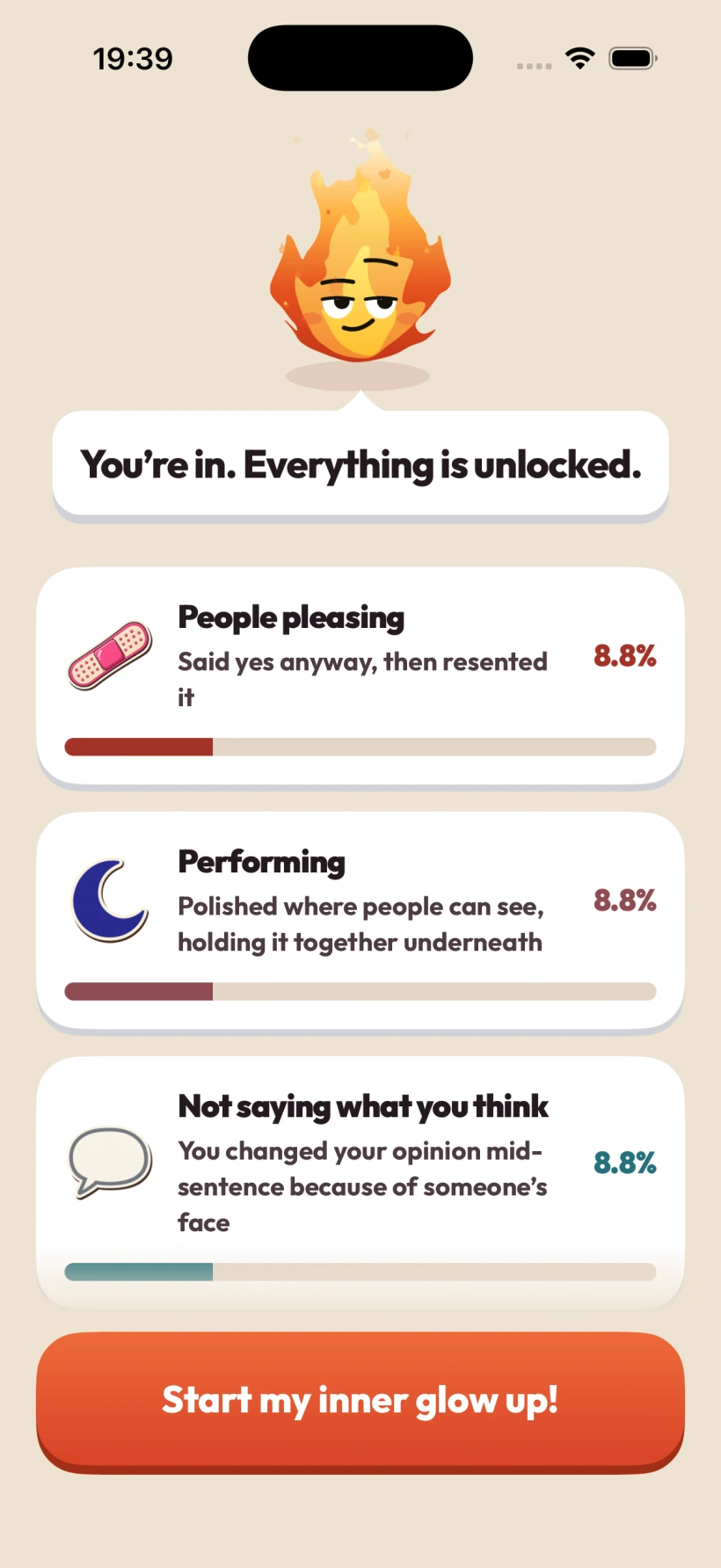
Keep reading
All of it →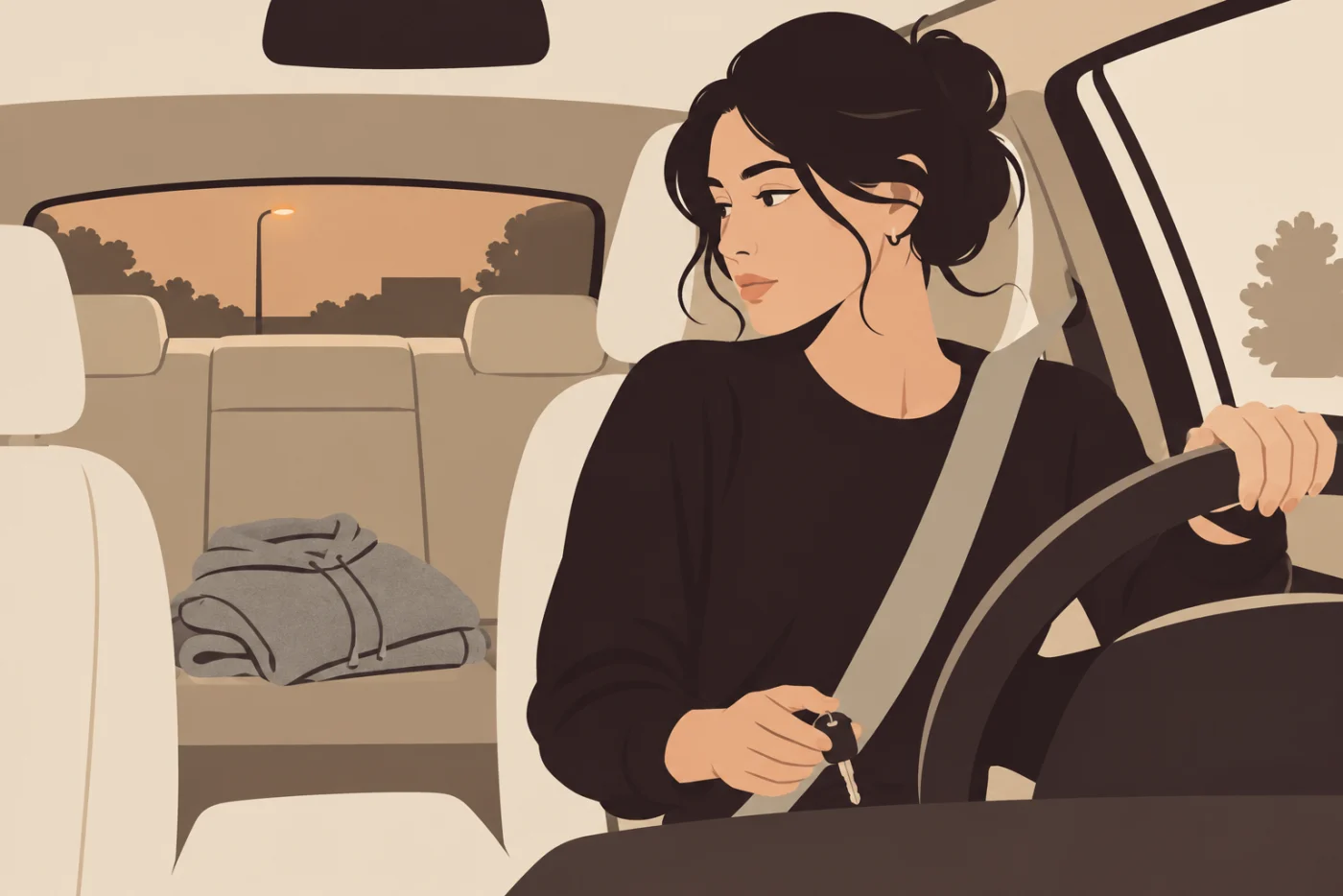
Situationships
How to Get Over a Situationship: A 7-Day Plan for When It Never Officially Ended
4 months, no label, and his hoodie is still in your back seat. The ending nobody handed you, and the first 7 days, one move a day.
Rosa Tan · 9 min read
Losing yourself
How to Find Yourself Again Without Leaving Him: 9 Signs From a Tuesday
Someone asks what music you are into, and you pause. 9 signs from an ordinary Tuesday, and the order you say first.
Hannah Moore · 9 min read
Pushing people away
Why Do I Push People Away When It Gets Good? How to Catch the Exit on Day 3
He said he wanted to meet your friends, and by Thursday you answered in one word. The pull-back has a shape, and you can catch it on day 3.
Nadia Ferreira · 9 min read