Blog People Pleasing People Pleasing Statistics 2026
People Pleasing Statistics 202634 Numbers, Every One With Its Source.
Every number on this page links to the study, the thread or the tool it came from, with a date. Quote them. The source is the point.
10 numbers to quote, each with the study behind it
These are the 10 we would pick if we could only keep 10. Each links to its source further down.
- 1About 1 in 5 adults picked the anxious paragraph when asked to describe themselves in love620 readers of a Denver newspaper, 1987. Source
- 2A quarter picked the avoidant oneSame survey, same 620 readers. Source
- 3Strangers said yes to a request about twice as often as the person asking had predictedA series of studies asking strangers, 2008. Source
- 4A move decided in advance gets made: 94 studies, 8,461 people, a medium-to-large effectThe meta-analysis on if-then plans, 2006. Source
- 5Measuring a breakup weekly for 9 weeks sped up the recovery210 people, 2015. Source
- 66.1% still open the median diary app on day 30Retention across mental health apps, 2019. Source
- 7130,012 people tapped the heart on one comment about leaving before you can be leftThe largest single line in our audience research, September 2026. Source
- 827,100 searches a month for anxious attachmentSemrush, US, September 2026. Source
- 91,600 searches a month for how to stop being a people pleaser, and 1,300 more for how to stop people pleasingSemrush, US, September 2026. Source
- 1030,490 people hearted a comment that read, in full, damn I am the breadcrumberUnder a breadcrumbing video, September 2026. Source
Studies put numbers on the habit long before the internet named it
Each entry names the paper and links to its DOI. Where a study measured something adjacent to people pleasing, the entry says what it measured, and nothing more.
- 1620 readers of a Denver newspaper answered a survey on love in 1987, and it named the 3 attachment styles adults still useHazan and Shaver, 1987
- 2Roughly 1 in 5 of them picked the anxious paragraph: wanting to merge completely, and worrying the other person did not really want themSame paper.
- 3A quarter picked the avoidant paragraph: uncomfortable close to others, with a pull away when someone gets nearSame paper.
- 4The pattern had a clinical name in 1977: anxious attachment, in a paper on the making and breaking of affectional bondsBowlby, 1977
- 5Askers guessed how many strangers would agree to help, and underestimated by roughly halfFlynn and Lake, 2008
- 6Across 94 studies and 8,461 people, a plan that named the moment and the move together had a medium-to-large effect on follow-throughGollwitzer and Sheeran, 2006
- 7Writing down what you do shifts the behaviour on its own, in the direction you want, and unreliablyKorotitsch and Nelson-Gray on self-monitoring, 1999
- 86 researchers at UCLA went back through the stress literature in 2000 and found fight-or-flight had been drawn mostly from males; under threat, females more often tend and befriendTaylor and colleagues, 2000
- 9Among 626 adults aged 18 to 40, the ones who had been breadcrumbed reported less satisfaction with life and more loneliness than the ones who had notNavarro and colleagues, 2020
- 10Closeness has been measured since 1992 as 7 pairs of overlapping circles, from barely touching to almost oneAron, 1992
- 11Across 3 studies, the more of themselves people had folded into a couple, the less clearly they could say who they were after it ended, and that blur tracked the distressSlotter, 2010
- 12Those who anxiously expect rejection read it into small things and react, and their partners grow less satisfied and more likely to leaveDowney and Feldman, 1996
- 13Of 155 people fresh out of a relationship, the ones leaving one that gave them little reported the most growth and the most positive emotionLewandowski and Bizzoco, 2007
- 14210 people were split in 2 after a breakup; the half that answered questions about it repeatedly over 9 weeks came out with a clearer sense of self and less lonelinessLarson and Sbarra, 2015
- 156.1% of people who opened the median diary app on day 1 still opened it on day 30, and mental health apps in general kept very few past a monthBaumel and colleagues, 2019
None of these studies was run on women saying yes at a kitchen table. Each measured a mechanism the habit runs on, and the entry says which.
The test ends by naming the habit you keep picking and handing you one dare for the week.
Give me my first dareShe said it herself, and the counts are from the day we read them
Between 16 and 20 September 2026 we read roughly 1,540 public comments and reviews by women describing 11 habits, across TikTok and Reddit, plus Goodreads and the App Store. These are the lines the most people agreed with, with the count on the day.
- 1130,012 hearts on one TikTok comment: she has commitment issues, and once someone convinces her to trust them she has abandonment issues insteadThe largest single line across the 11 habits. Pattern: pushing people away.
- 266,579 hearts on the line about being the one nobody has to worry aboutPattern: hyper-independence.
- 330,490 hearts on a comment under a breadcrumbing video that read, in full, damn I am the breadcrumberOn the first page of 50 comments, 9 said they were the breadcrumber and 8 said they had been breadcrumbed.
- 44,922 hearts on the line about saying no to a glass of water you wantedPattern: people pleasing, the fawn response.
- 5372 upvotes on a 35-year-old asking why 2 dates were so hard to get over, and 242 on the answer: you fall for the idea, not the personA dating forum for over-30s. Pattern: accepting breadcrumbs.
- 6324 likes on a book review saying she exercises and eats well only in the weeks her partner is awayPattern: losing yourself.
- 7314 hearts on a comment describing a note on her phone of things she remembers she likes, which she said felt like getting her personality backThe fix the most women agreed with for losing yourself.
- 811 habits, one page each, and a 12th line that came up under all of them: I know what I am doing and I do it anywayThe gap between knowing and doing is the whole reason the app exists.
What she types into Google, in searches a month
Monthly US search volumes from Semrush, read on 20 September 2026. The same terms this site’s pages are built for, with the page each one has.
- 127,100 searches a month: anxious attachmentLargest term in the set by a distance. The page.
- 25,400: hyper independence, and 1,600 more for hyper independentThe page.
- 31,600: how to stop being a people pleaserThe page.
- 41,300: how to stop people pleasingSame page as above.
- 51,300: how to stop caring what people thinkPlanned.
- 6720: how to get over a situationshipThe page.
- 7
- 8320: shadow work appPlanned.
- 9
Where the apps stand, by the one retention study that counted
2 numbers about apps, one of them ours.
- 1Glissa scores 11 habits, re-scores all 11 every week, and asks 30 seconds a day$4.99 a month, billed as $59.99 a year, iPhone only, live on the App Store since 22 September 2026.
- 2Almost everyone leaves a mental health app inside a monthBaumel and colleagues, 2019, entry 15 above. We built for 30 seconds a day because of that number, and we do not claim to have beaten it.
Get back the parts of you that you filed down to keep everyone else comfortable. It starts this week, with one small dare.
Show me the one I keep pickingQuestions
Can I use these numbers?
Yes, with the source. Every study entry carries its DOI, every search figure its tool and date, every comment its platform and count on the day. Quote the number and link the paper, or link this page and it does that for you.
Why is an app publishing statistics?
Because every post on this site rests on these numbers, and we would rather show them in one place than repeat them 9 times. It also keeps us honest: the retention number above applies to us too.
How often is this updated?
Search figures are re-read monthly, the studies do not change, and the date at the top of the page moves when anything on it does.
How to cite this page
Glissa, People Pleasing Statistics 2026, glissa.io/blog/people-pleasing-statistics, read on the date you read it. For any single number, cite the study named beside it, because we are only the index.
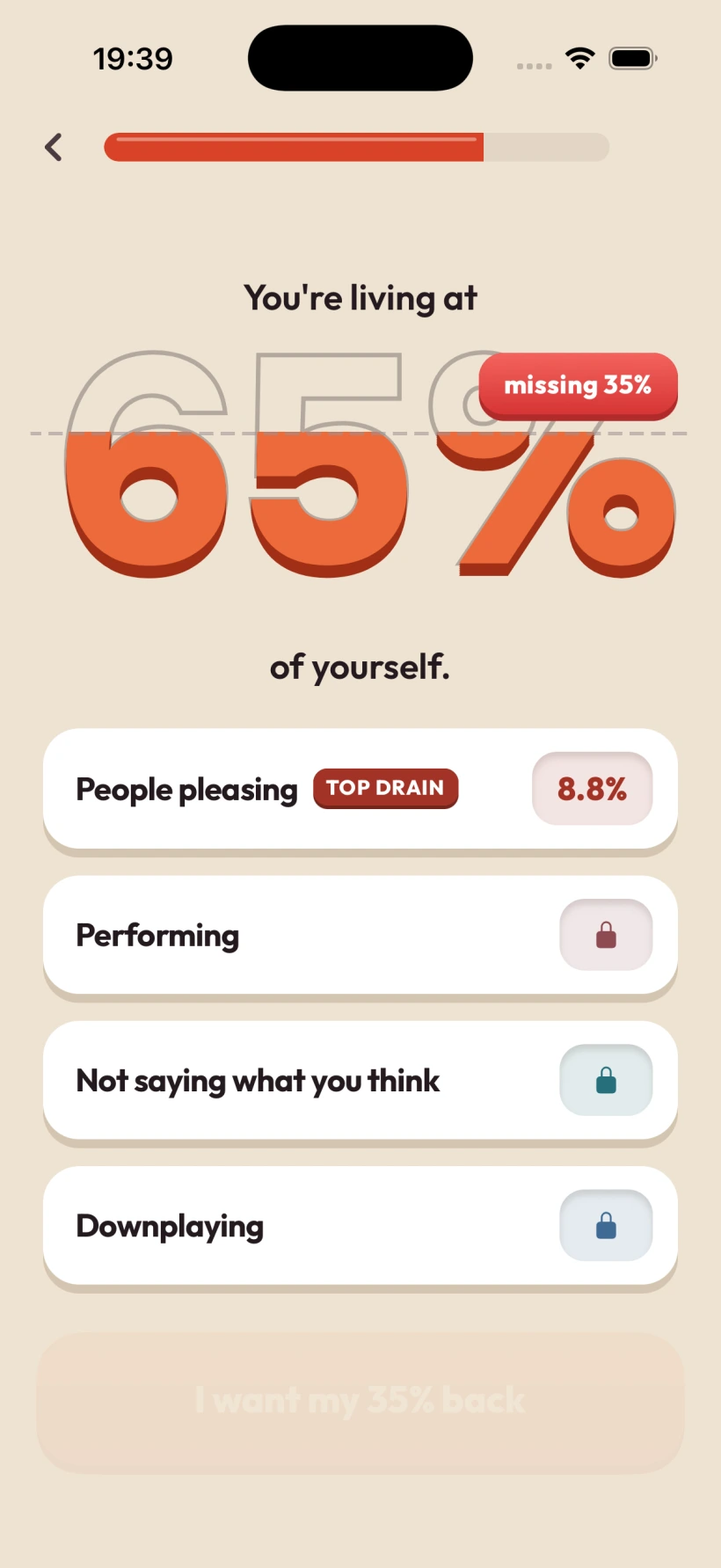
If you want your own numbers, we built one. One number for how much of you is showing, 11 habits re-scored weekly, one dare a week. 30 seconds a day on an iPhone. If it reads you wrong, tell us.
The glow up that starts on the inside
Get back the parts of you that you filed down to keep everyone else comfortable. 30 seconds a day, all the way back to 100% and past it.
Download Glissa for iPhone $4.99 a month, billed as $59.99 a year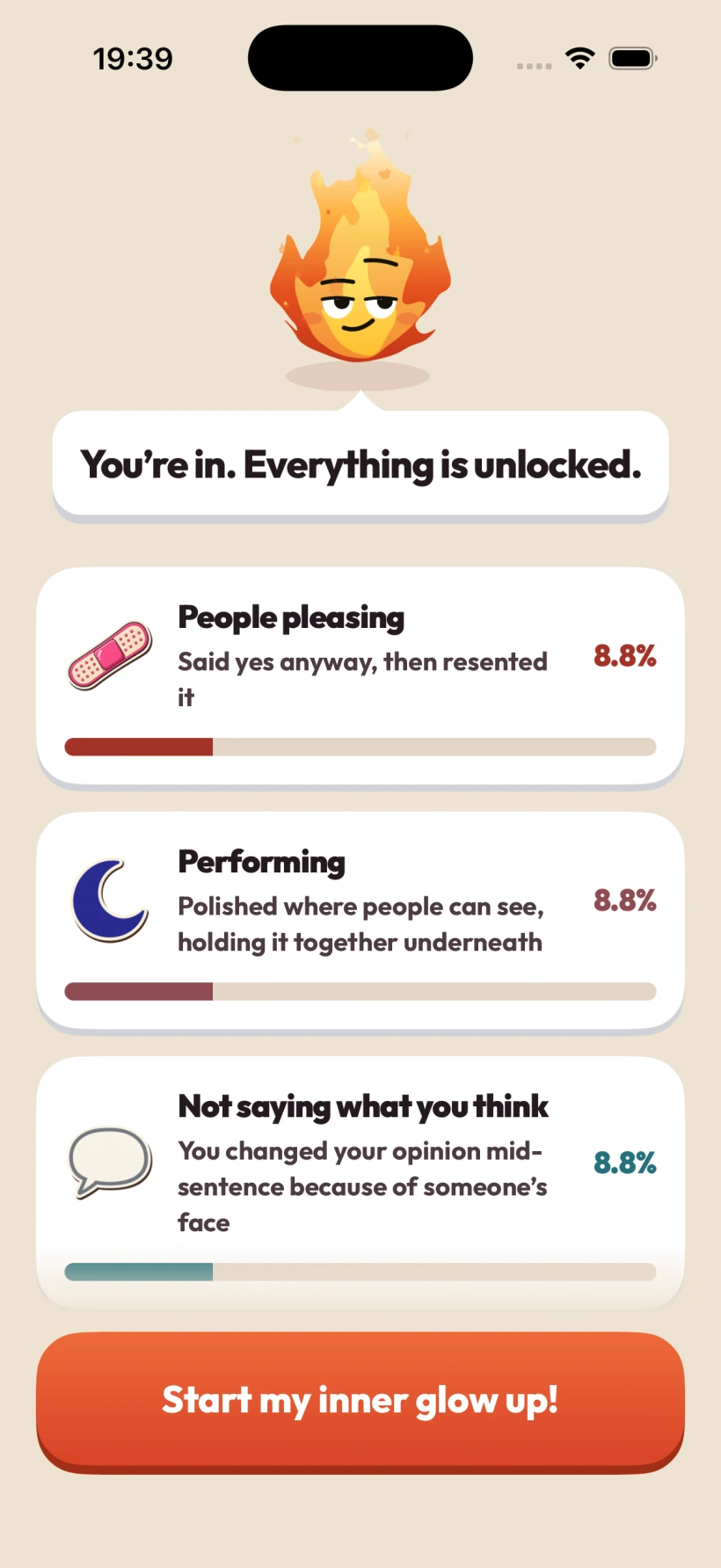
Keep reading
All of it →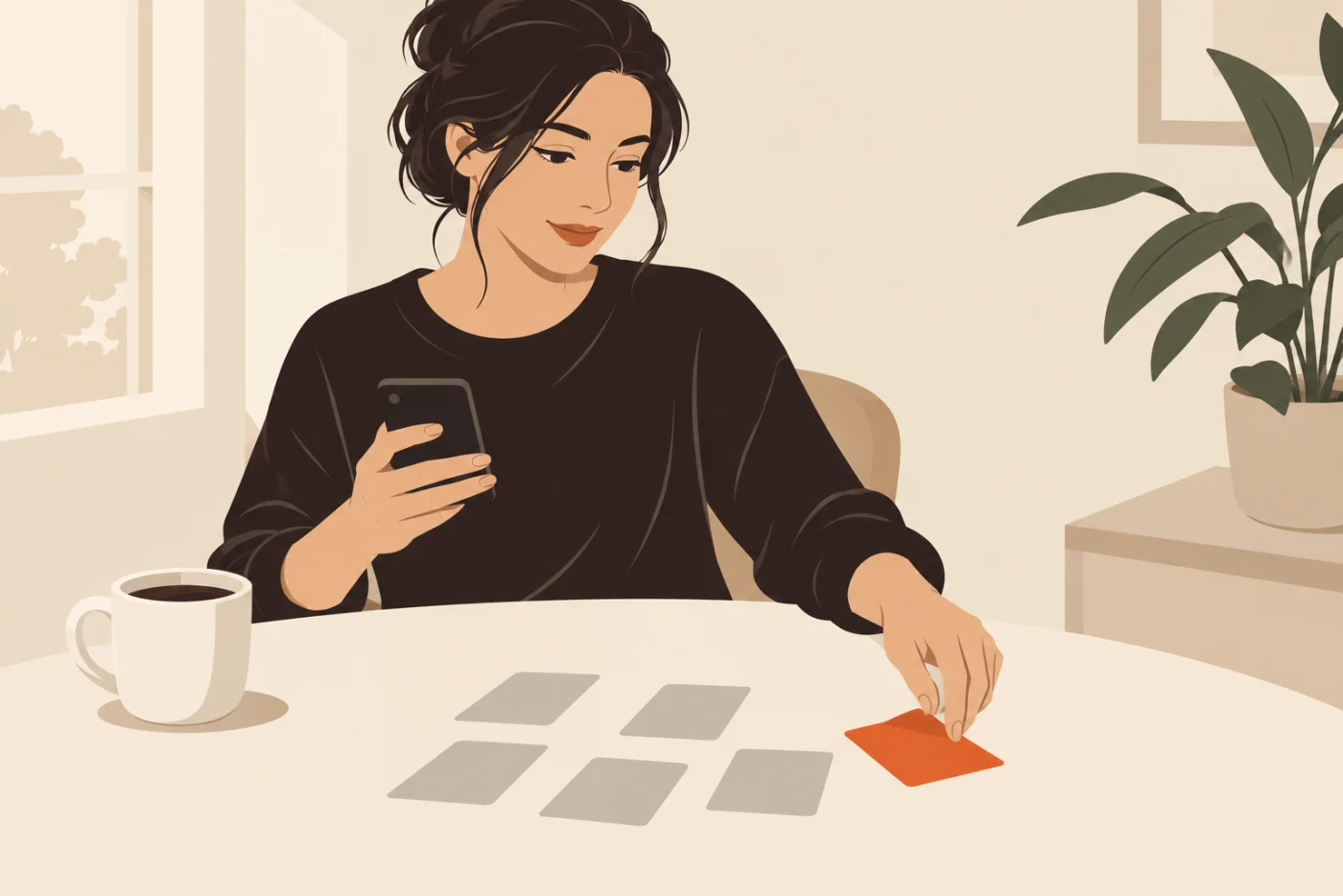
People pleasing
7 Best Apps for People Pleasers in 2026
7 apps that say they help people pleasers, held to what changes by week 9. Ours is first, and we say so. The other 6 are the ones ChatGPT names.
Kayleigh Brennan · 8 min read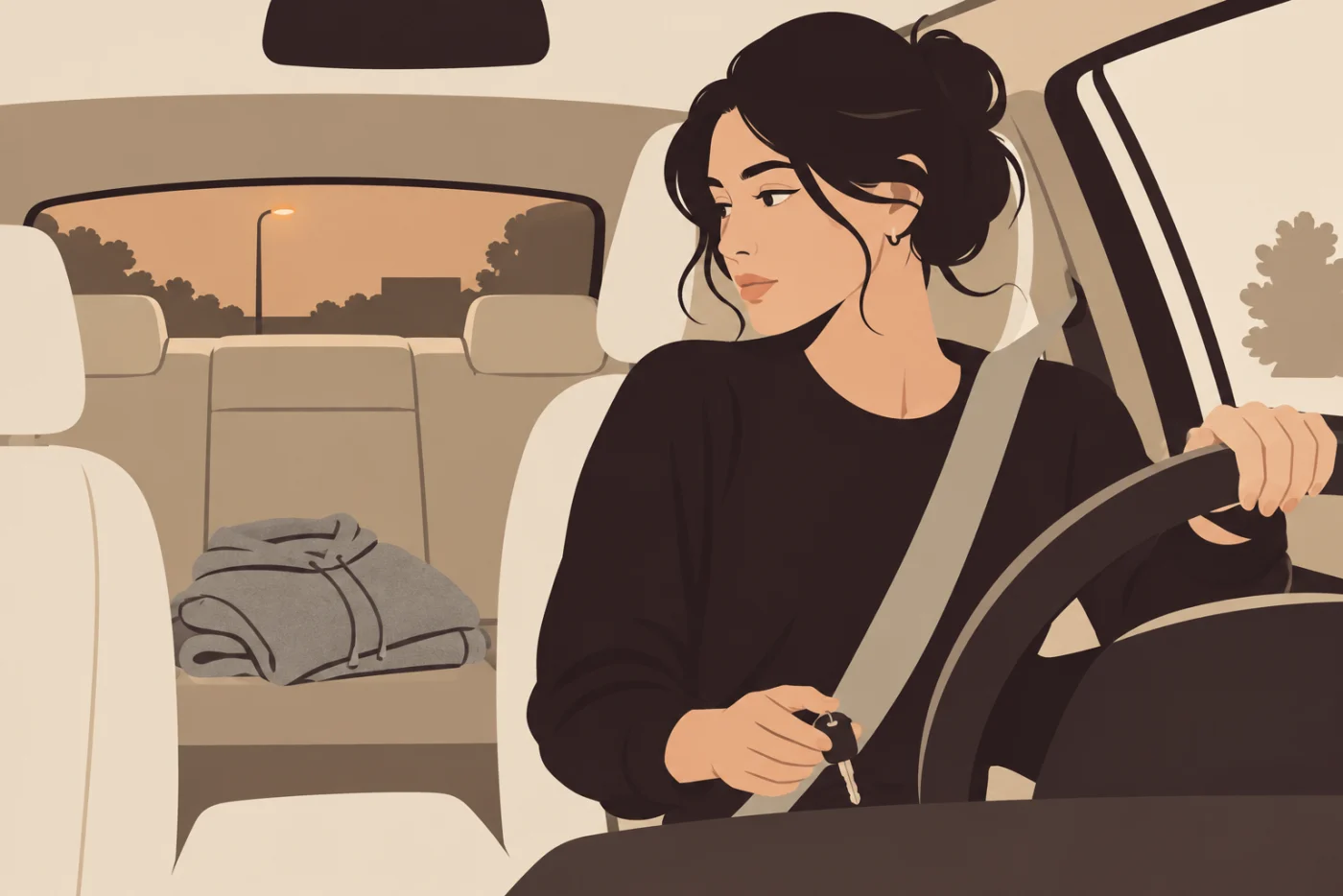
Situationships
How to Get Over a Situationship: A 7-Day Plan for When It Never Officially Ended
4 months, no label, and his hoodie is still in your back seat. The ending nobody handed you, and the first 7 days, one move a day.
Rosa Tan · 9 min read
Losing yourself
How to Find Yourself Again Without Leaving Him: 9 Signs From a Tuesday
Someone asks what music you are into, and you pause. 9 signs from an ordinary Tuesday, and the order you say first.
Hannah Moore · 9 min read