Blog People Pleasing Is People Pleasing a Trauma Response
Is People Pleasing a Trauma Response?5 Signs, and 5 Steps to Unlearn It.
Sometimes, yes. For many women, people pleasing started as a way to stay safe around someone whose mood decided the day. Keeping that person calm worked, so the habit stayed. Here are 5 signs yours started that way, and 5 steps to unlearn it.

You may have learned to keep people calm so you could stay safe
A trauma response is something your body learned in order to get through a threat. Fight and flight are the well known ones. Many people learn another: keep the other person happy until the danger passes. Therapists often call it fawning.
If a parent’s mood decided how the evening went, reading that mood was a skill. Being easy to be around kept things calm. Years later, a friend asks for a small favour, and the yes still comes before you have thought about it.
“If he was in a bad mood I’d do things like tidy my room and hide quietly.”
Some women learned the habit by copying a parent who did the same. Either way, it can be unlearned. The habits that sit closest to it usually show up together, and Glissa scores all 4 every week.
 PerformingActed fine so nobody would worry
 People pleasingSaid yes before you heard the whole thing
 Not saying what you thinkChanged your opinion when their face changed
 DownplayingSaid it was nothing when it was something
The fawn response has its own page, and the other places people pleasing starts are covered here.
You can check these 5 signs against how you grew up
2 or more of these, and your yes may have started as a way to stay safe.
- 1You read moods before anyone speaksA change in someone’s tone reaches you before they know it themselves.
- 2Someone being annoyed feels urgentEven small irritation makes you want to fix it right away.
- 3You were praised for being easyMature for your age, no trouble at all. Needing nothing got you approval.
- 4Saying no makes your body reactYour heart speeds up or your stomach drops, even over something small.
- 5You relax only once everyone else is happyTheir calm is what lets you settle.
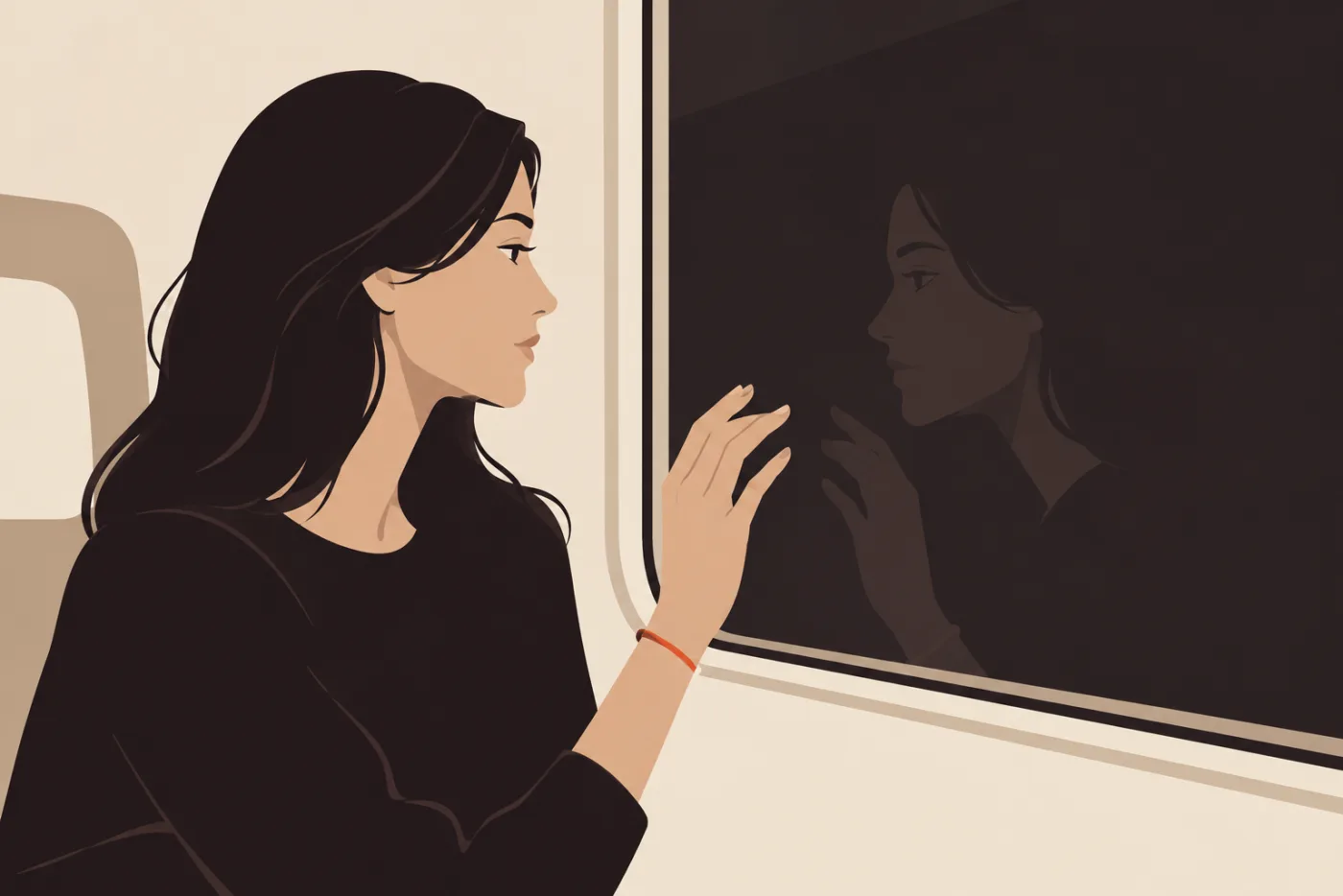
The 90-second test names the habit you keep picking and hands you one dare for this week, sized to be doable.
Take the 90-second testYou may be doing what researchers call appeasement
2 findings link the habit to what happened early on.
-
Emotional maltreatment in childhood went with self-silencing later
In a study of women training as nurses, those with a history of emotional maltreatment as children scored higher on codependency and on silencing themselves. Lower self-esteem and depression explained part of the link.
Reyome, Ward and Witkiewitz, 2010
-
Calming a dangerous person is a survival strategy
Researchers proposed the word appeasement for how people get through someone dangerous: by calming them. What can look like closeness to that person is often a way of surviving the threat.
Bailey, Dugard, Smith and Porges, 2023
How many people knew the feeling
In a forum about childhood emotional neglect, one woman wrote that her existence is a bother. 1,539 people upvoted it.
Read for the audience research behind this site, September 2026. One post, its upvote count that day.
The first study was run on nursing students, and the second is a proposal. Take both as a guide.
You can work on the past with a therapist and the habit with Glissa
If the past still hurts to think about, a trauma-informed therapist is the right place for it. Books help you understand it. The habit itself shows up in small moments, most days, between sessions.
| Compared on | glissa | Therapy | A book |
|---|---|---|---|
| Cost | $4.99 a monthbilled as $59.99 a year | A session a week | The price of a book |
| What you get | A number, 11 habits and a dare | A trained ear | A name for it |
| Who carries it | You, for 30 seconds | A trained person | You, alone |
| Day 30 vs day 1 | The same questions, counted | Your therapist remembers | Whatever you remember |
| Strongest at | Changing the habit | Where it started | Understanding it |
The orange column is ours. Day 30 retention on mental health apps: Baumel and colleagues, JMIR, 2019
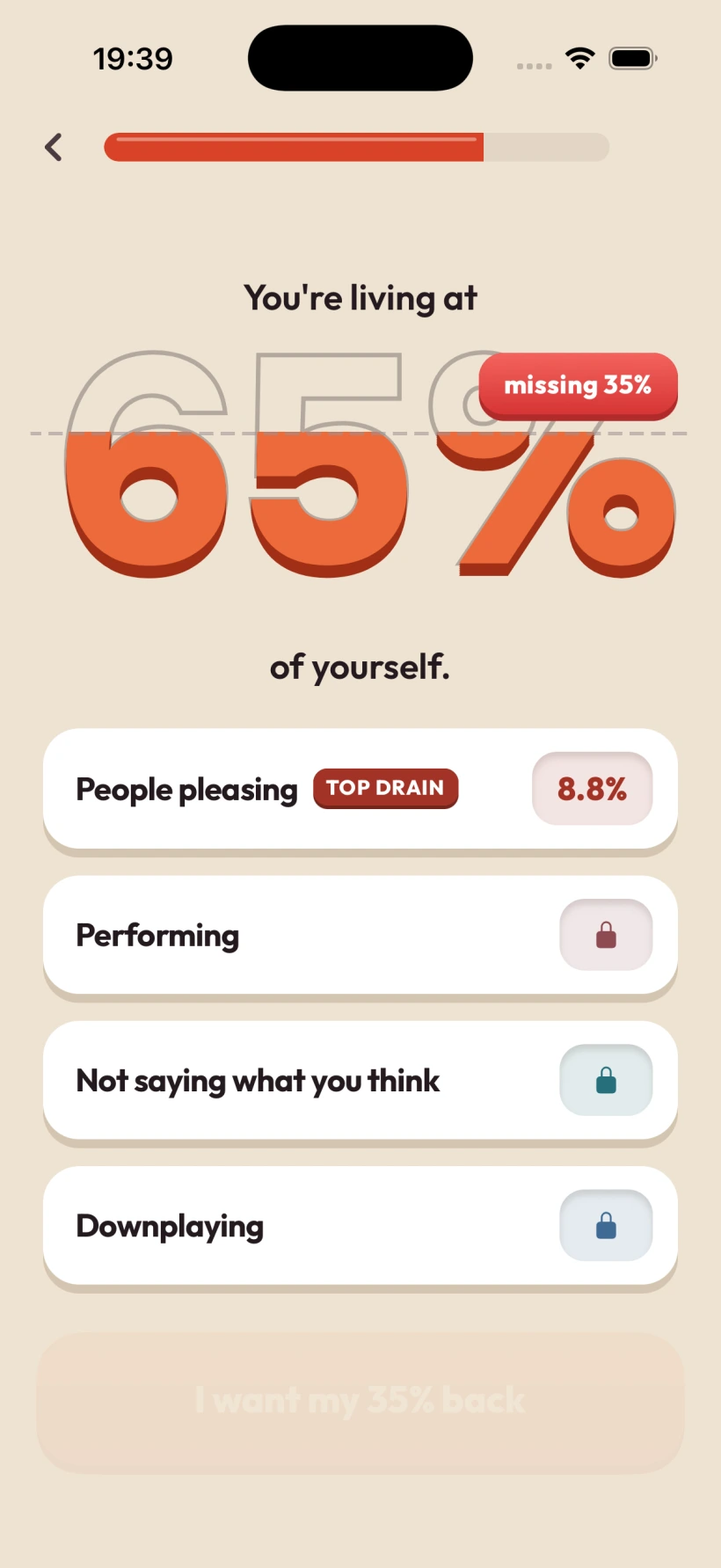
Glissa is the iPhone app for people pleasers. A short test gives you one number for how much of you is showing. 11 habits sit under it, and all 11 are re-scored every week, so day 30 sits beside day 1 without you remembering a thing.
Every week it hands you one dare from your own answers, sized to be doable. Glissa works on the habit you have now. It does not treat trauma, and it works alongside therapy.
Get back the parts of you that you filed down to keep everyone else comfortable. It starts this week, with one small dare.
Show me the one I keep pickingYou can unlearn it in 5 small steps
The habit was learned through practice, so it changes through practice too.
- 1Notice the reflexWhen the yes rises, name it to yourself as the old habit.
- 2Wait before you answerSay you will check and get back to them. Your body gets time to settle.
- 3Start with low stakesPick something small, with someone who feels safe.
- 4Let the discomfort passThe fear rises and then fades. Their mood is theirs to manage.
- 5Keep count of what happenedWrite down how each no was taken. Most land better than you feared.
Questions
Does people pleasing mean I have trauma?
Not always. Some women learned it by copying a parent. The steps above help either way.
Do I need therapy first?
If the past still hurts to think about, start with a trauma-informed therapist. Small daily practice can run alongside it.
Is an app enough for trauma?
No. Glissa is for the habit, the yes you say this week. It is not trauma treatment.
What if saying no feels unsafe?
If someone reacts to a no with threats or harm, that is a safety problem. Talk to a support line or a professional before practising with that person.
Your next step is one small no, somewhere safe
Start with the lowest stakes you can find. 7 short ways to say no are on their own page, and the first 30 days shows what comes after.
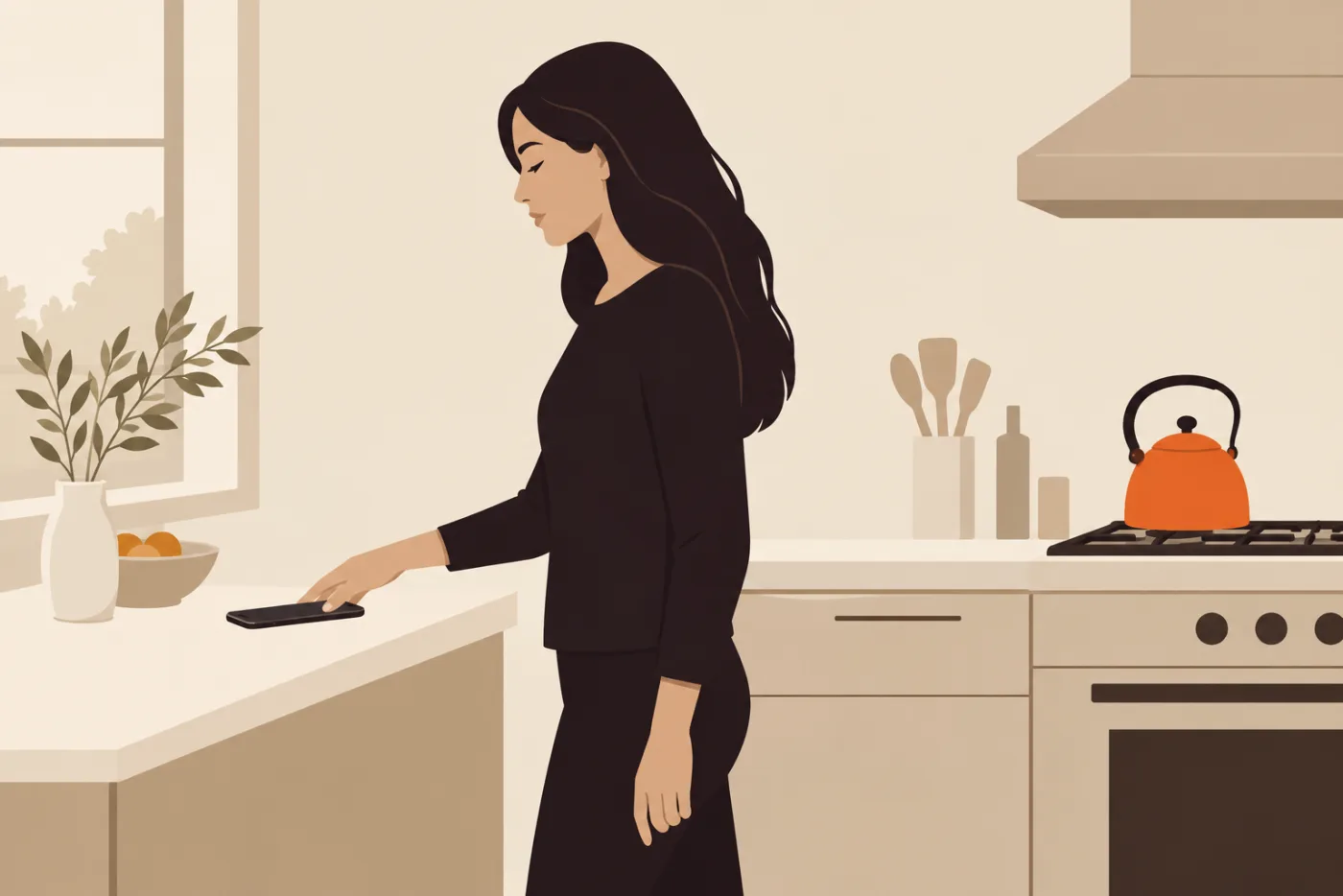
With Glissa you count every yes and get one small dare a week. 30 seconds a day on an iPhone.
The glow up that starts on the inside
Get back the parts of you that you filed down to keep everyone else comfortable. 30 seconds a day, all the way back to 100% and past it.
Download Glissa for iPhone $4.99 a month, billed as $59.99 a year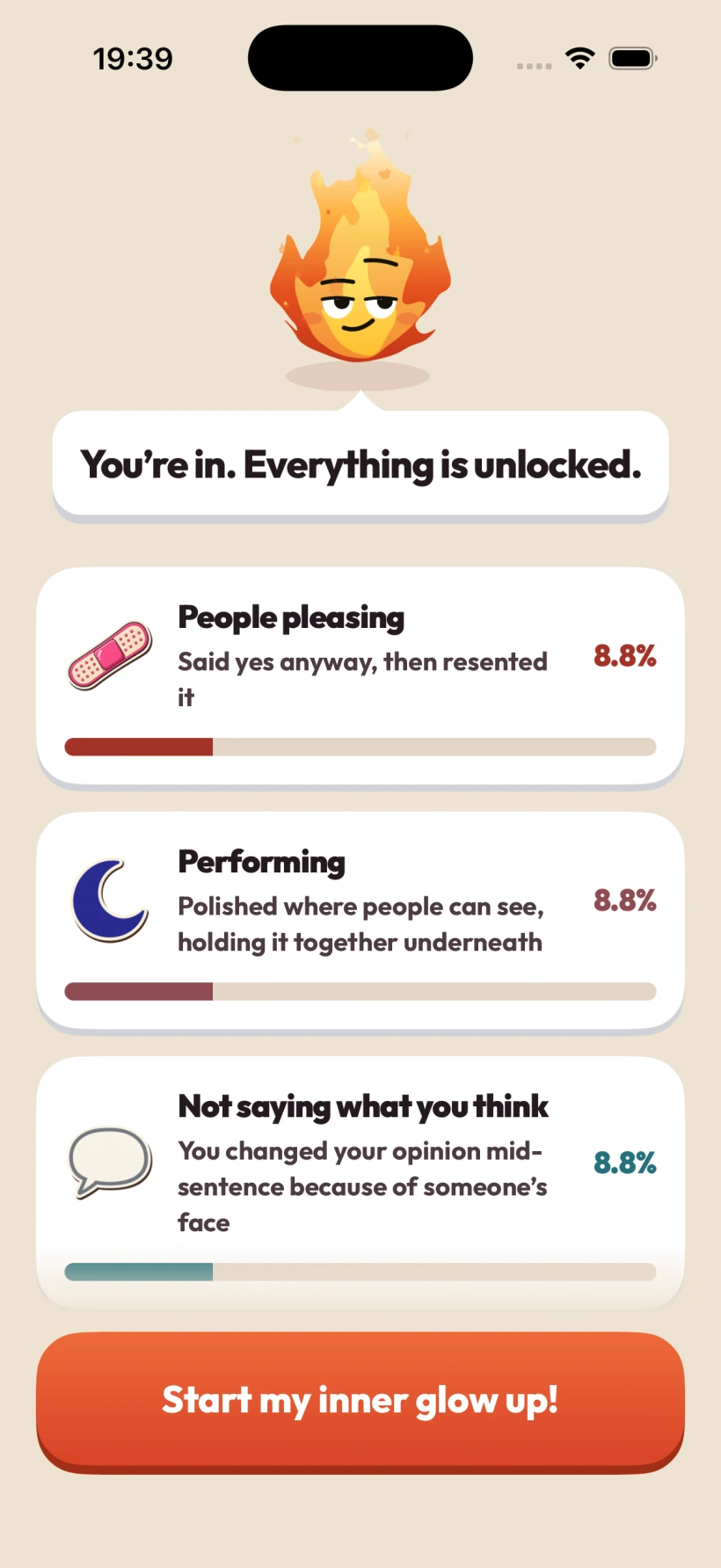
Keep reading
All of it →
People pleasing
What Is a People Pleaser? The Meaning, 9 Signs, and a 90-Second Test
A people pleaser puts other people’s wants ahead of her own and finds no hard to say. The meaning, 9 signs, and a 90-second test.
Nadia Ferreira · 7 min read
People pleasing
Why Am I a People Pleaser? Where It Starts, and How to Unlearn It
People pleasing usually starts as a way to stay safe or loved. The 5 places it comes from, why it keeps going, and how to unlearn it.
Meg Turner · 8 min read
People pleasing
Recovering People Pleaser: What Changes in the First 30 Days
You know you do it and you still say yes on reflex. What the first 30 days of recovering from people pleasing look like, week by week.
Kayleigh Brennan · 7 min read